
Socialization of Teachers as Family Education Leaders – Strengthening the Synergy between Teachers and Parents in HI PAUD
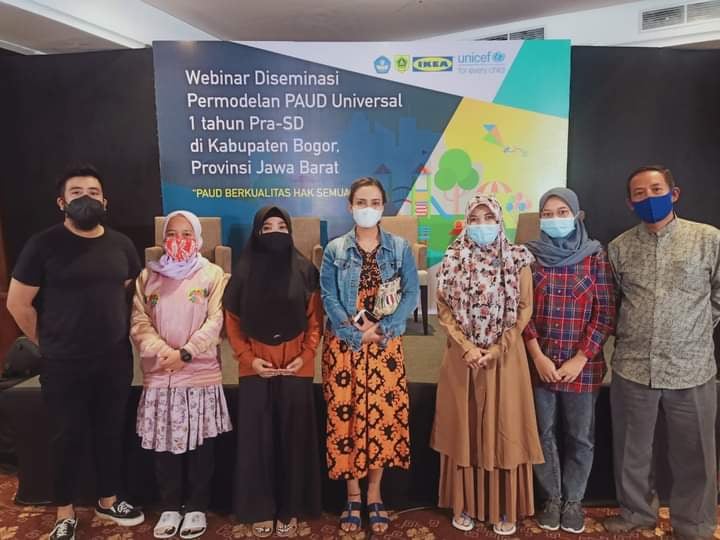
Bandung, 23 Oct 2021.
Praise be to God Almighty, F2H was given the opportunity to expand its family education program through the Driving Organization Program (POP), a Ministry of Education, Culture, Research, and Technology program to improve the competency of educators and education personnel by involving community organizations (ormas) in the education sector. Under this program, F2H submitted a proposal for “Family Education Driving Teachers – Strengthening Teacher and Parent Synergy in HI Early Childhood Education” and was accepted as one of 42 tiger organizations, targeting 21 to 100 educational units.
Unfortunately, due to the COVID-19 pandemic, the program was delayed, resulting in significant changes to the budget and timeline. Ultimately, it was agreed that the planned training activities would only be conducted online, requiring the F2H team to completely revise the program’s design and budget. Despite various challenges and limitations, the program’s socialization was finally held on October 21, 2021, in Lombok and October 22, 2021, in Bogor. This event invited the Department of Education, Himpaudi, and school principals and teachers from PAUD institutions who will be involved in the Family Education Driving Teachers program – Strengthening the Synergy of Teachers and Parents in HI PAUD.
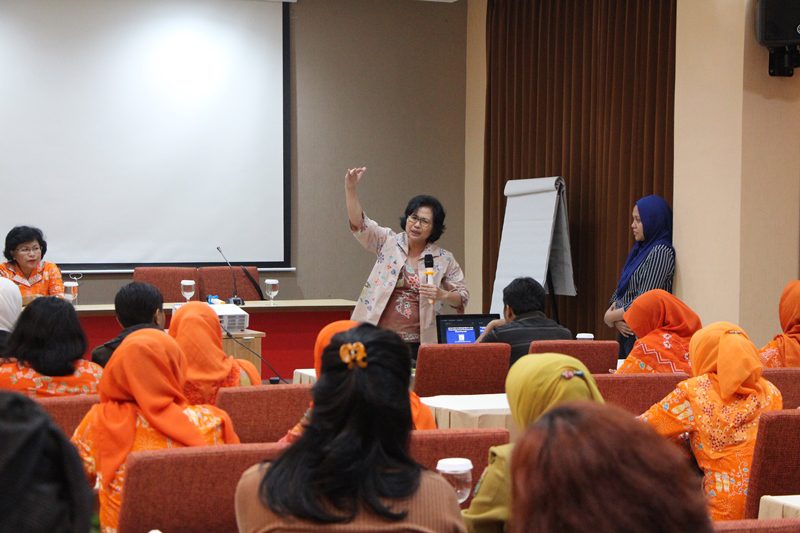
Opening the socialization, Dr. Lies explained the core of the F2H program proposal, namely, Improving the Capacity of Educators and Education Personnel in Child Development and Interaction. Prof. Anna Alisjahbana, the founder of F2H, explained the role of PAUD teachers as agents of change. The training material was then presented by a team of psychologists, consisting of Ms. Fanny Zefanya, Marissa C. Sulastra, and Kori Dyah W. The meeting concluded with a question and answer session.
The socialization sessions in Lombok and Bogor garnered several questions, including the possibility of involving unselected PAUDs, the role of Himpaudi (Indonesian Child Development Association), and how PAUD teachers can change the system long-term. It was explained that the currently selected PAUDs are appointed by local agencies, but those selected will later become trainers for other PAUDs, with Himpaudi acting as a partner for knowledge transfer. It was also mentioned that PAUD teachers will receive advocacy training to gain support from the village.
Specifically, the explanation of child development material generated many questions about how to handle cases in the field, including children who lack independence (who refuse to be left by their mothers), hyperactive children, and children with special needs. The team of psychologists briefly answered the questions that arose, noting that more in-depth discussions would take place during the training. The meeting concluded with information on the next activities: data collection, data confirmation, and training for PAUD teachers and principals, which, if all goes well, will be held in November. Hopefully!
 Dedicated to community empowerment, especially in the field of maternal and child health (KIA) and early childhood development.